
Sex Offender Checks in Kent County
The official starting point for a Kent County sex offender search is the Michigan Public Sex Offender Registry, or PSOR. Michigan State Police manages this public subset of the broader law-enforcement Sex Offender Registry. Search by a person’s name or registration number when identity is known. For a place-based check, select Kent County or enter a city, ZIP code, street address, or map location. The result is a registry record, not a general criminal history report.
When PSOR is busy or the result needs confirmation, use the published registry hotline at 866-761-7678 or CJIC registry line at 517-241-1806. Kent County Sheriff Records can answer local registration questions at 701 Ball Avenue NE. If the concern crosses a state line, the federal search adds other jurisdictions. Each channel serves a distinct task, so a blank result in one should not be treated as proof that no court or criminal record exists.
The Michigan State Police registry guide shows the public help and status definitions used in a Kent County check.
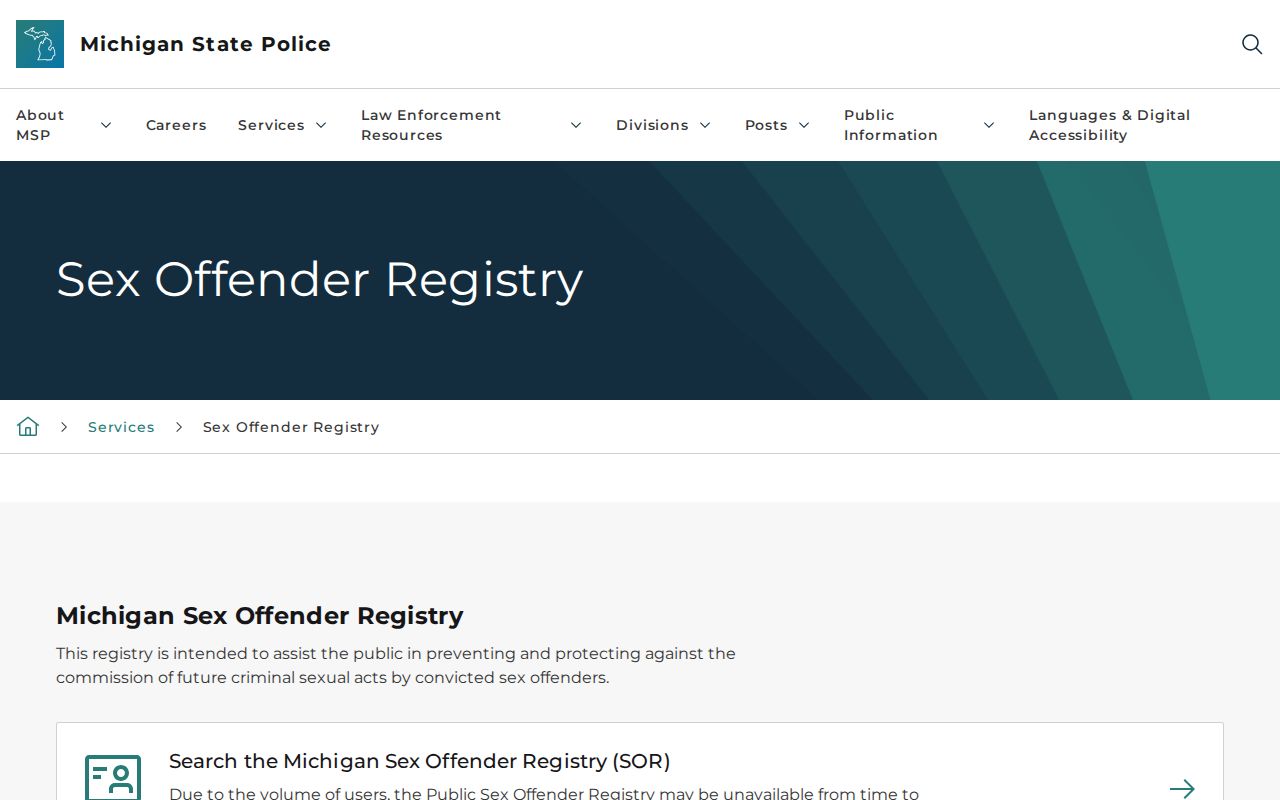
That guide is the best source for interpreting a PSOR label before drawing a conclusion from it.
Kent County PSOR Search Paths
PSOR offers more than a single surname box. Name searching accepts partial first and last names. An identifier search can use a registration number or MDOC number. Geographic controls support a street, city, county, ZIP code, and a neighborhood map. The map offers quarter-mile, half-mile, one-mile, two-mile, and five-mile radii. List links can also narrow the display to published registrants, incarcerated registrants, or people marked non-compliant.
Choose the route that matches what is known. A name route works best with spelling and another profile fact. A map route answers who is displayed near a place, but the mapped address still needs to be read with the person’s status. An incarcerated status, for example, changes what a mapped home address means. Whole-list downloads are prohibited, though an individual public page may be printed.
The official PSOR search screen displays the tools used to narrow Kent County registry results.
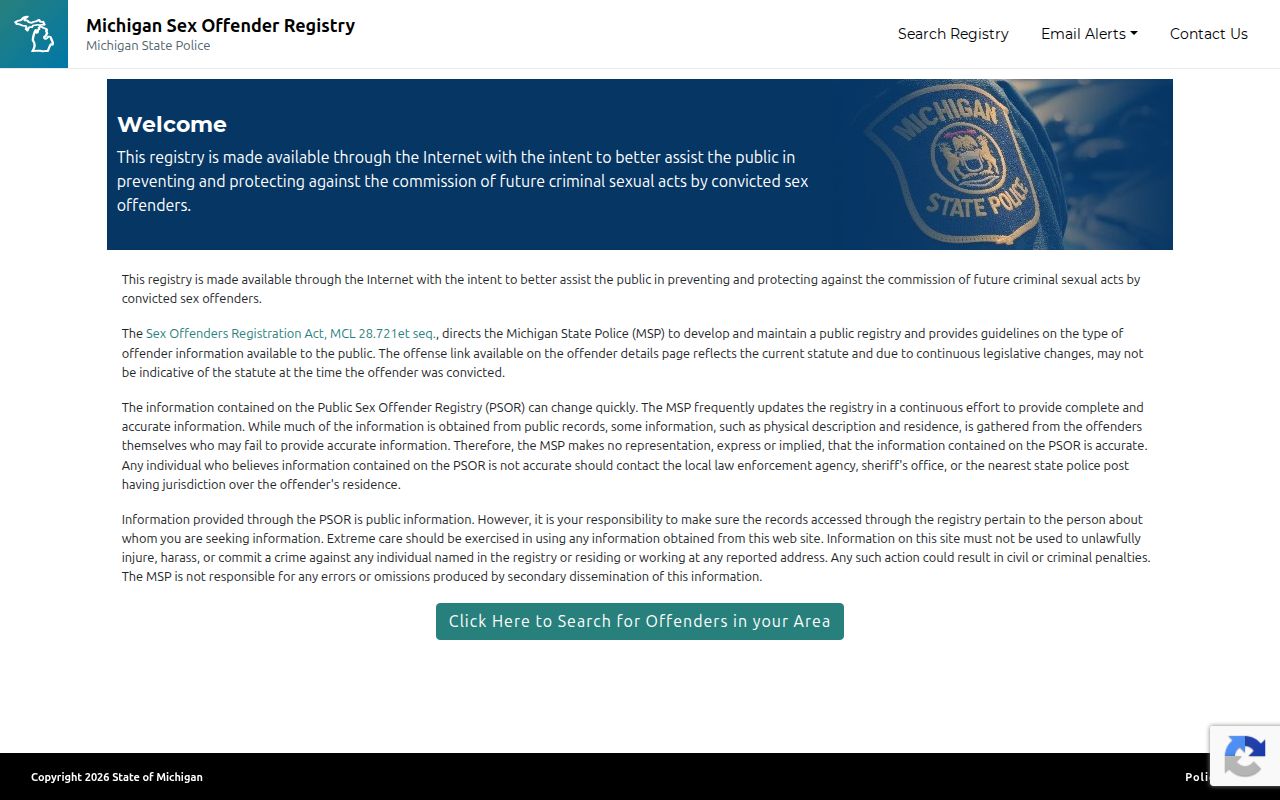
The range of controls makes it possible to move from a broad county view to a specific, verifiable profile.
How to Search the Michigan Public Sex Offender Registry
Start with the least ambiguous facts available and change only one search condition at a time. This helps explain why a result appears or disappears. The registry may be temporarily unavailable during heavy traffic, so keep the hotline and other official routes available as fallbacks.
- Open PSOR and choose a name, identifier, address, county, ZIP, or neighborhood map search.
- For a county view, select Kent. For a person, enter both names, with partial names allowed.
- Review the result list, then use View Details or Map Offender instead of relying on a name alone.
- Read status, compliance, offense, registration, and location fields together before using the information for safety planning.
| Field Label | Type | Required | Options or Notes |
|---|---|---|---|
| First and Last Name | Text | Both | Partial names are accepted |
| Registration or MDOC Number | Text | Alternative | Use either identifier when known |
| Street Address | Text | Conditional | Pair with city, county, or ZIP |
| City, County, ZIP | Text or select | No | Select Kent for a county search |
| Neighborhood Map | Map controls | One or more | Address, city, ZIP, or county |
| Radius | Dropdown | Map search | .25, .50, 1, 2, or 5 miles |
| List Filters | Links | No | Published, incarcerated, non-compliant |
Note: A broad Kent County map is useful for awareness, while an identifier search is stronger for confirming one known record.
Kent County Registry and NSOPW
Michigan PSOR is the direct source for a Kent County registry check, but it does not search every state. The National Sex Offender Public Website is the U.S. Department of Justice gateway for participating jurisdictions. Use it when a person may have moved, when a trip or family plan crosses state lines, or when the Michigan search does not cover the place in question. A national match should still be opened at the contributing jurisdiction’s official page.
PSOR, NSOPW, ICHAT, and a convicting court file answer different questions. PSOR shows Michigan’s current public registration data. NSOPW expands the geographic sweep. ICHAT shows eligible public Michigan criminal-history entries. A court file supplies the filed charge and disposition. Continue to the court or statewide history channel when registry information alone does not explain the case outcome.
The national public search provides the cross-state layer for a Kent County safety check.
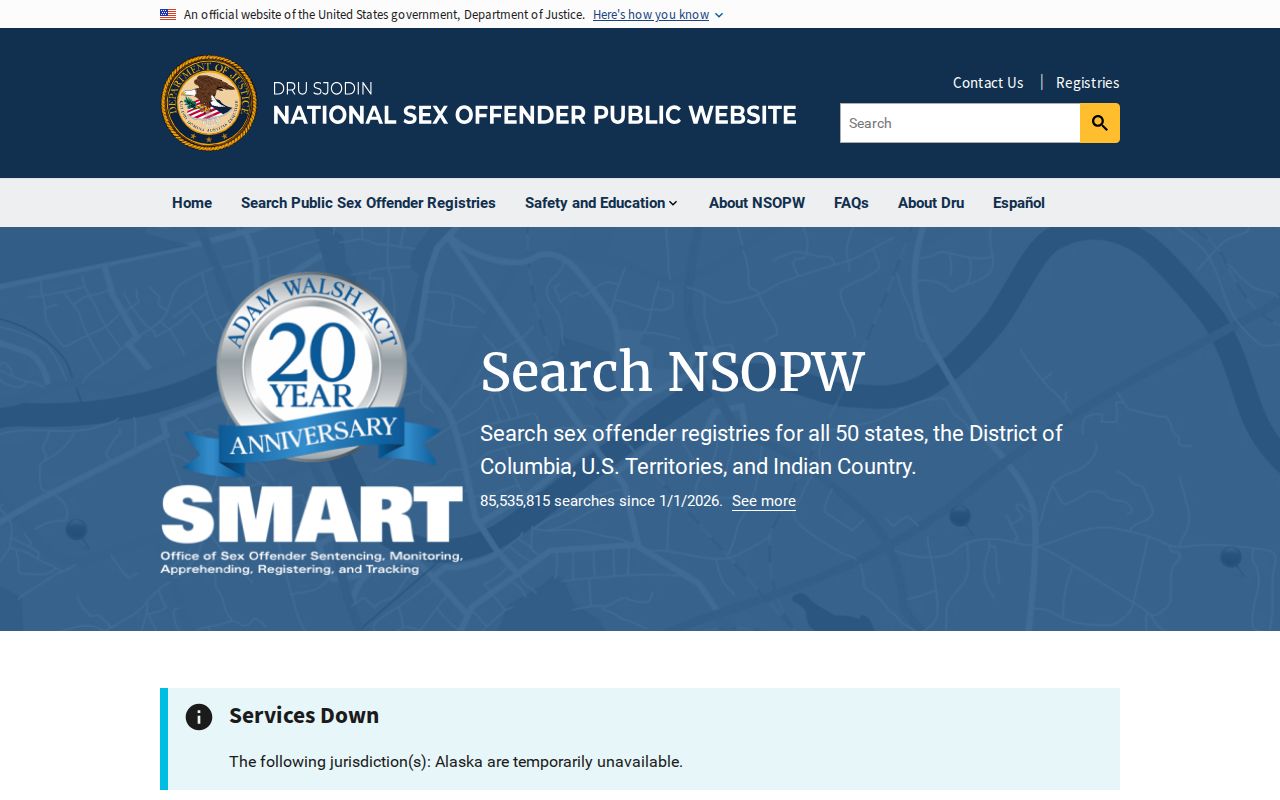
Its value is breadth, while Michigan PSOR remains the primary source for the state’s profile details.
Inside a Registry Profile
A Kent County PSOR profile combines identity, registration, offense, location, and status fields. No one field tells the whole story. The address is a registered location, while the status may say the person is incarcerated, out of state, homeless, school-only, or otherwise in a category that affects how the location should be read. Victim information is not published.
| Name and Aliases | Published name plus alternate names associated with the registration record |
|---|---|
| Photo and Descriptors | Photo, date of birth, and scars, marks, or tattoos where shown |
| Registration Details | Registration number, tier information, and related registry data |
| Offense Information | Offense, statute, and date where the public profile presents them |
| Location Information | Registered address, mapped location, campus, and vehicle data as applicable |
| Status and Compliance | Separate labels for registry status and reported compliance issues |
The official inventory includes a neutral work-location field. That field is part of the public interface, not a cue to use registry data for prohibited screening or discrimination.
Kent County Status and Compliance
Status and compliance are separate PSOR concepts. Status describes the person’s registry situation, with labels such as Active, Incarcerated, Pending Out of State, Inactive Out of State, Absconder, Homeless, School Only, or Employment Only. Compliance flags identify a reported issue involving an address, required form, verification, fee, vehicle, phone, campus, identification, license, or another duty. A person can therefore have a status label and a distinct compliance flag.
Absence from the public Kent County list can also have several lawful explanations. The person may be deceased, a nonresident, covered by juvenile or HYTA treatment, removed by a court, past the registration term, subject to a set-aside, outside the offense list, or within a narrow public exclusion. The broader law-enforcement SOR is not identical to public PSOR.
The Michigan SORA definitions and tier law provides the legal frame for these Kent County registry categories.
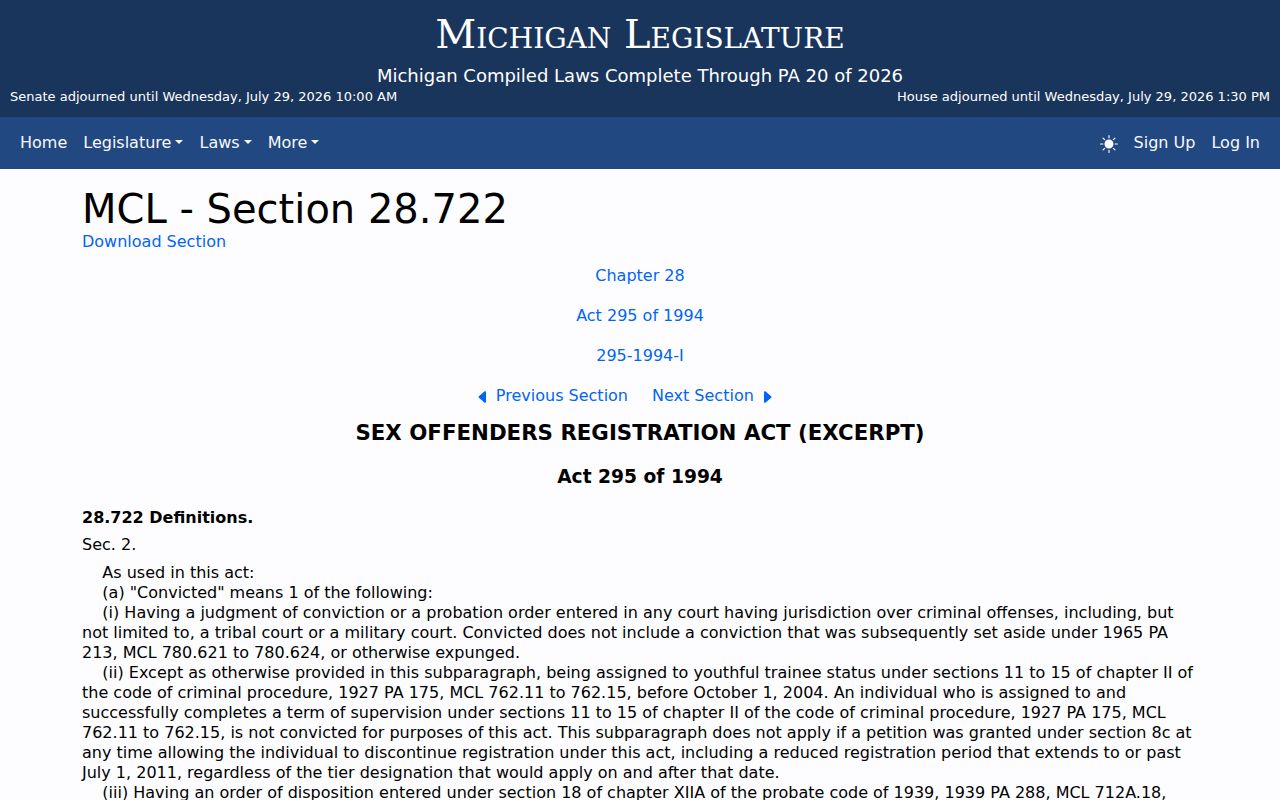
The statute helps separate a formal classification from assumptions based only on a search result.
Michigan Registration Levels and Requirements
Michigan uses three tiers. The offense-specific classification and registration duration law control, not a generic federal shorthand. Tier I registrants verify in their birth month. Tier II uses paired six-month intervals, and Tier III follows a quarterly cycle based on birth month. Kent County registration staff apply those state rules at the local reporting office.
| Michigan Tier | Duration | Verification |
|---|---|---|
| Tier I | 15 years | Annually |
| Tier II | 25 years | Semiannually |
| Tier III | Life | Quarterly |
Registration also carries a one-time $50 fee and a $50 annual fee, subject to a $550 total cap. Duration, reporting dates, and any exception must be checked against the person’s controlling classification.
The official duration statute shows the law behind Kent County verification periods.
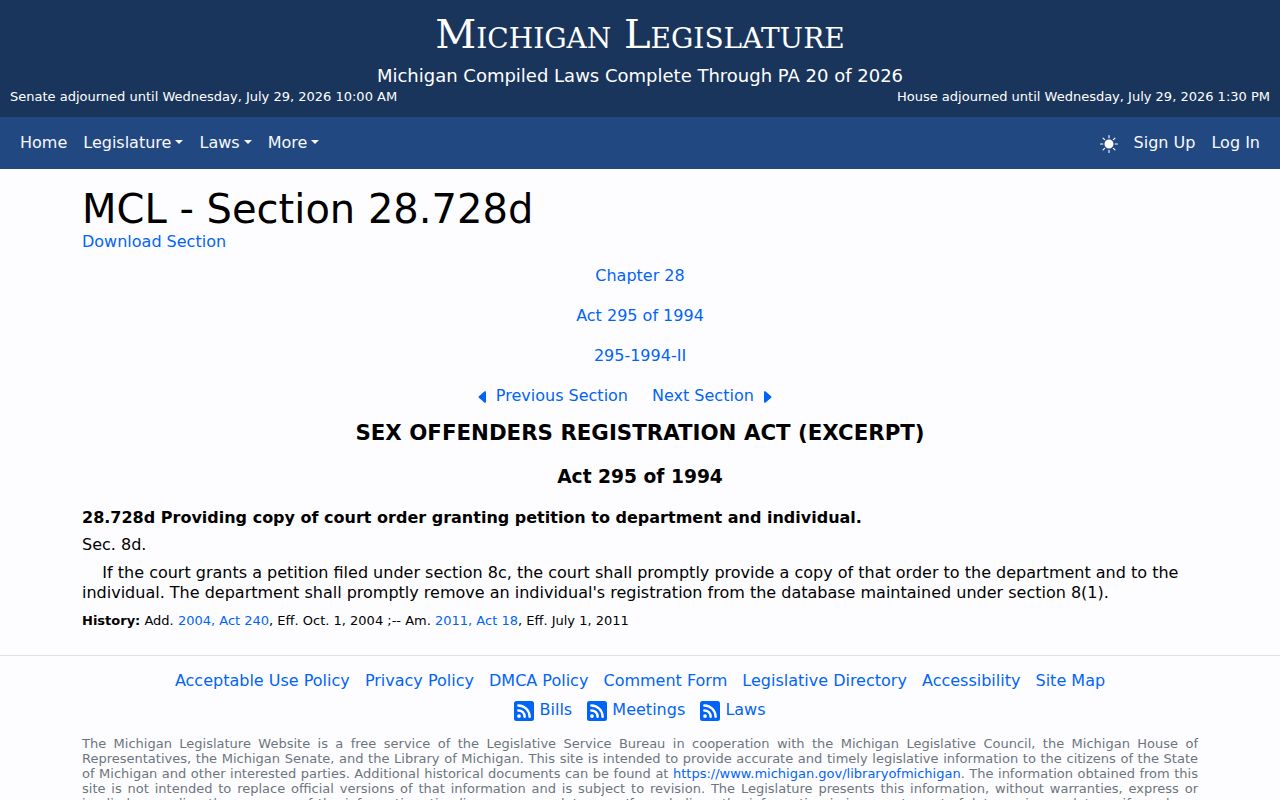
Reading the statute beside the profile prevents a tier label from being reduced to an unsupported guess about an end date.
Kent County Registry Reporting Duties
Many reportable changes have a three-business-day deadline. A residence or domicile change, legal-name change, start or end of work, and higher-education enrollment change generally must be reported in person. Temporary lodging lasting more than seven consecutive days, a vehicle change, or a phone change may use an authorized mail, drop-off, or in-person route. An interstate move must be reported in person no later than three business days before the move.
Forms include RI-004 and RI-004A. The precise method matters. A phone call that asks a question does not replace an in-person report when the law requires personal reporting. Kent County residents should confirm the proper counter and schedule on the Sheriff Records page before travel because service availability can change.
PSOR also offers Track Offender. Enter the email address twice, accept the terms, and register. A confirmation should arrive within 24 hours, after which notices may report a move, work change, or school change. Alerts add timely notice, but the live profile remains the source to verify.
Kent County Registration Help
Kent County Sheriff Records is at 701 Ball Avenue NE, Grand Rapids, MI 49503. The main line is 616-632-6200, and posted weekday hours are 9:00 a.m. to 5:00 p.m. The county contact directory is a second route for confirming the responsible unit. The neighboring correctional facility is at 703 Ball Avenue NE, so do not confuse jail operations with the Records counter.
Suspected noncompliance may be reported to local law enforcement or the state SOR hotline. The Kent County departments directory helps identify the proper local office. Give the facts that support the concern and let the responsible agency check the record. Michigan’s reviewed official sources did not confirm a blanket current statewide school or park distance rule, so no such Kent County restriction should be assumed from a map alone.
Note: Call before a trip when the question concerns a specific registration service, required form, or current counter schedule.
Community Notification and Lawful Use
Registry information supports personal, family, and neighborhood safety. Use it to understand published locations, track a profile, or give law enforcement a factual report of suspected noncompliance. Do not treat every registrant as presenting the same risk, infer guilt in a new event, or use a map result as a substitute for the official profile.
The Michigan public dissemination law, MCL 28.728c, authorizes access and sets limits on misuse. It does not authorize threats, intimidation, harassment, vigilantism, or crime. Contact law enforcement or the registry hotline instead of confronting a person.
The official dissemination provision shows the limits that accompany public Kent County registry access.
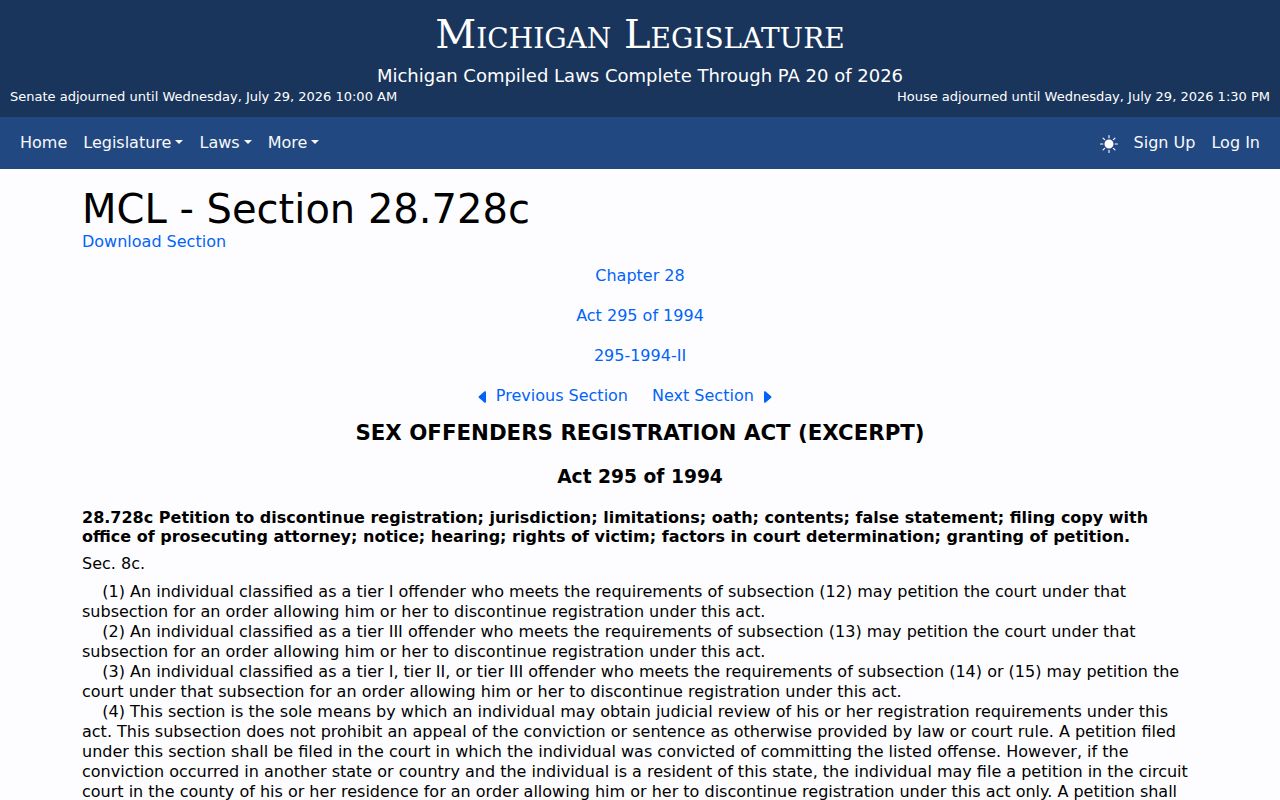
The public search is a prevention tool, and the law requires it to be used with care.
Misuse is a crime: MCL 28.728c bars using PSOR information to threaten, intimidate, harass, or commit a crime. Report concerns to law enforcement.